ARRIVALGetting drivers confident in a radically new electric vehicle, from their first drive.
At Arrival, I designed a company-wide training system for its radically new electric vans and buses, built the first piece drivers needed, and set up who would own it after me.
Aug 2020 to Jun 2022
Senior Service Designer, Arrival
-
Company-wide training strategy and driver onboarding (1 year), end-to-end van customer journey (3 months)
-
Signed off for the First Bus trial. Arrival folded before vehicles reached clients, so the trials never ran
-
Two client-facing roles hired.
Onboarding signed off for the First Bus trial and handed to Sales.
184 vehicle interactions catalogued, Arrival's first record of how its vehicles worked.
Four product gaps raised with engineering.
-
I led the training strategy and onboarding end to end, working across 8 workstreams with UX research, engineering, brand, digital and automotive sales.
Arrival was building radically different electric vans and buses for fleet clients.
Vehicle makers usually leave training to the customer, but here the controls, screens and safety features were new to every driver, and many fleet drivers are wary of new technology. If drivers didn't trust the vehicle on day one, fleets wouldn't adopt it.
Training also reached well beyond drivers: every stage of owning the vehicle, from sale to end of life, and at least ten roles, from technicians to cleaners and shunters.
I designed the system, then built its first release.
I led this end to end, from the company-wide training strategy down to every word drivers would read, across eight workstreams.
For the first trials
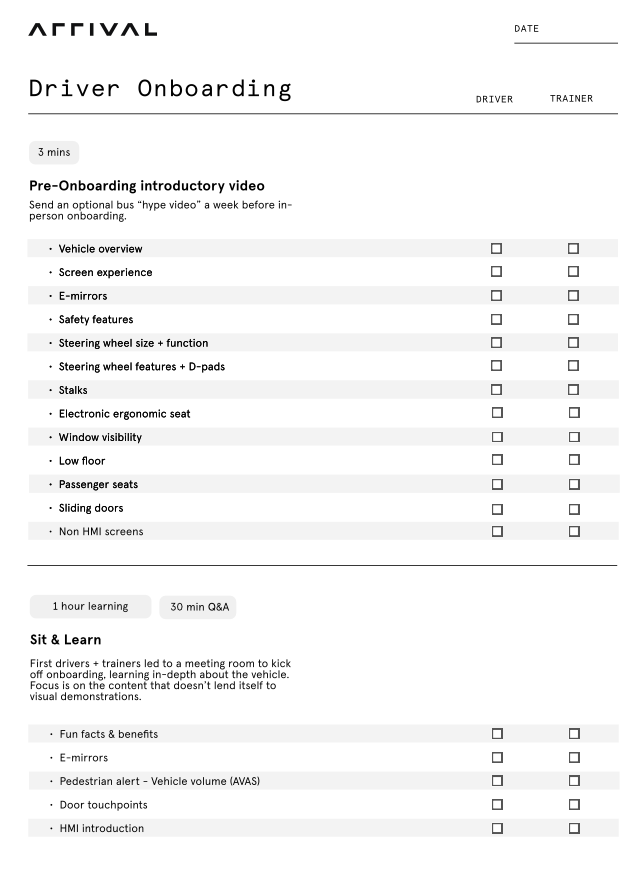
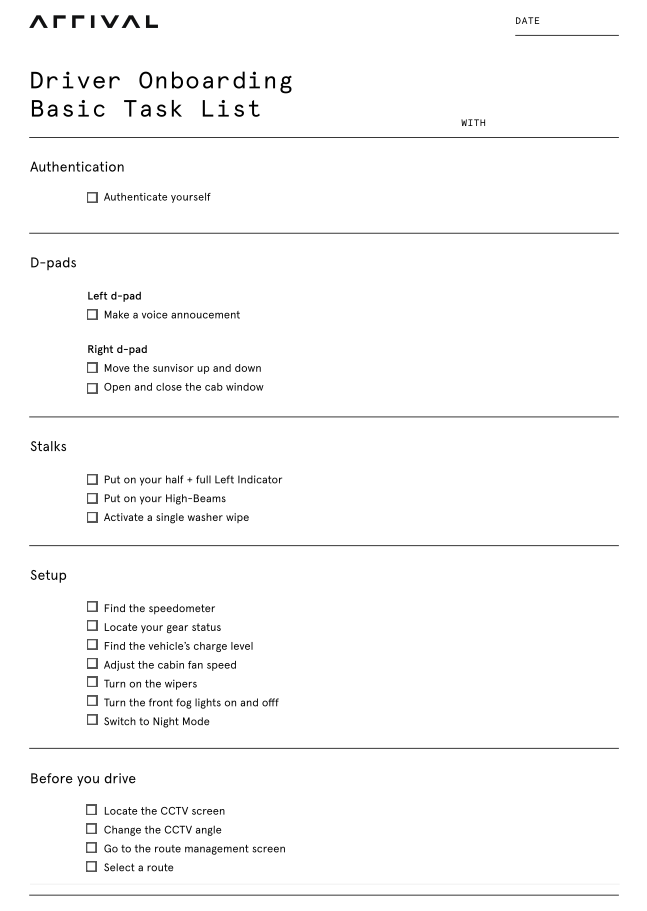
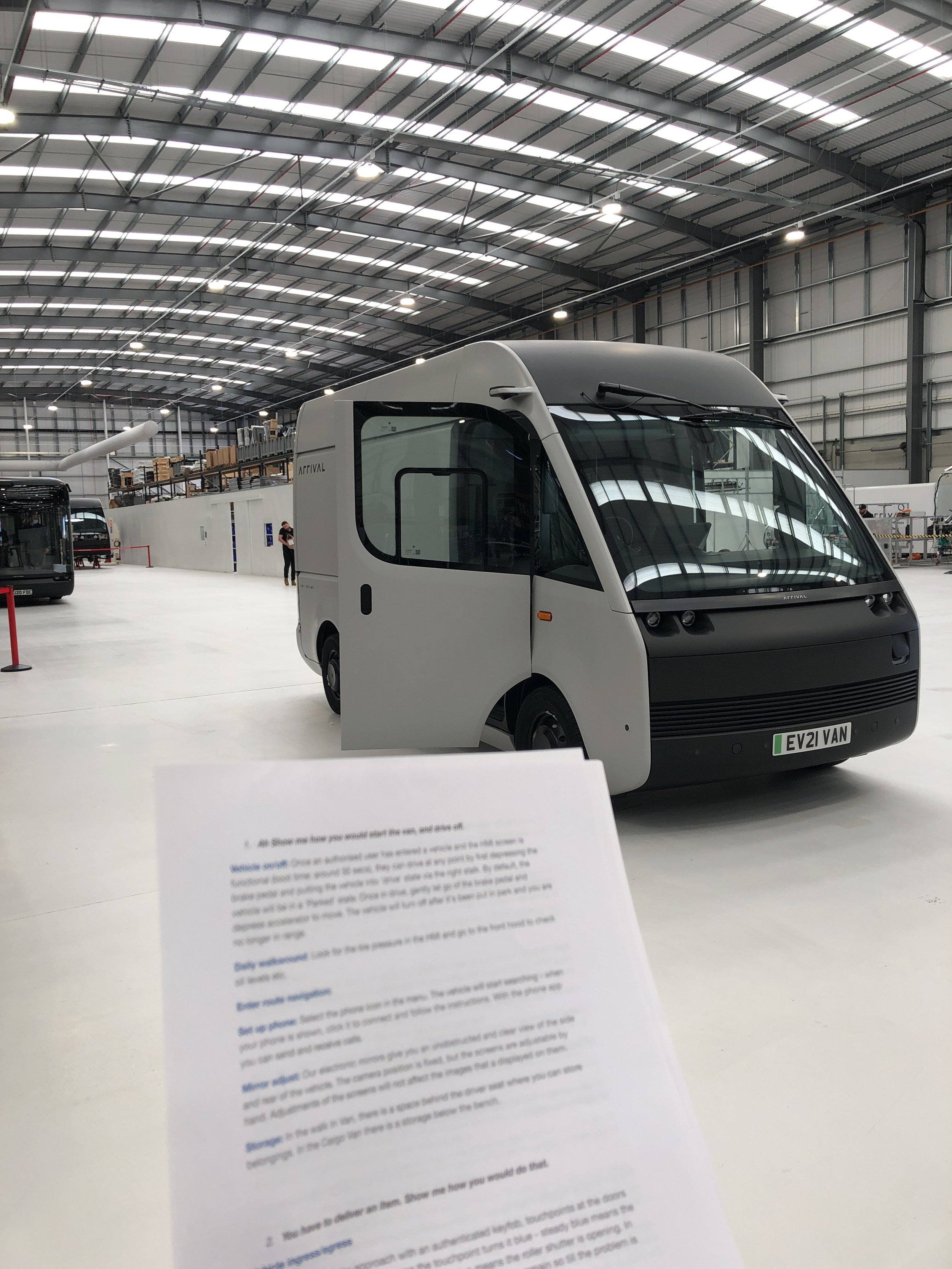
A five-part onboarding: intro video, classroom session, vehicle walkaround, cab task list and practice drive
All content and scripts, written by me, with videos directed alongside a Brand editor and professional voiceover
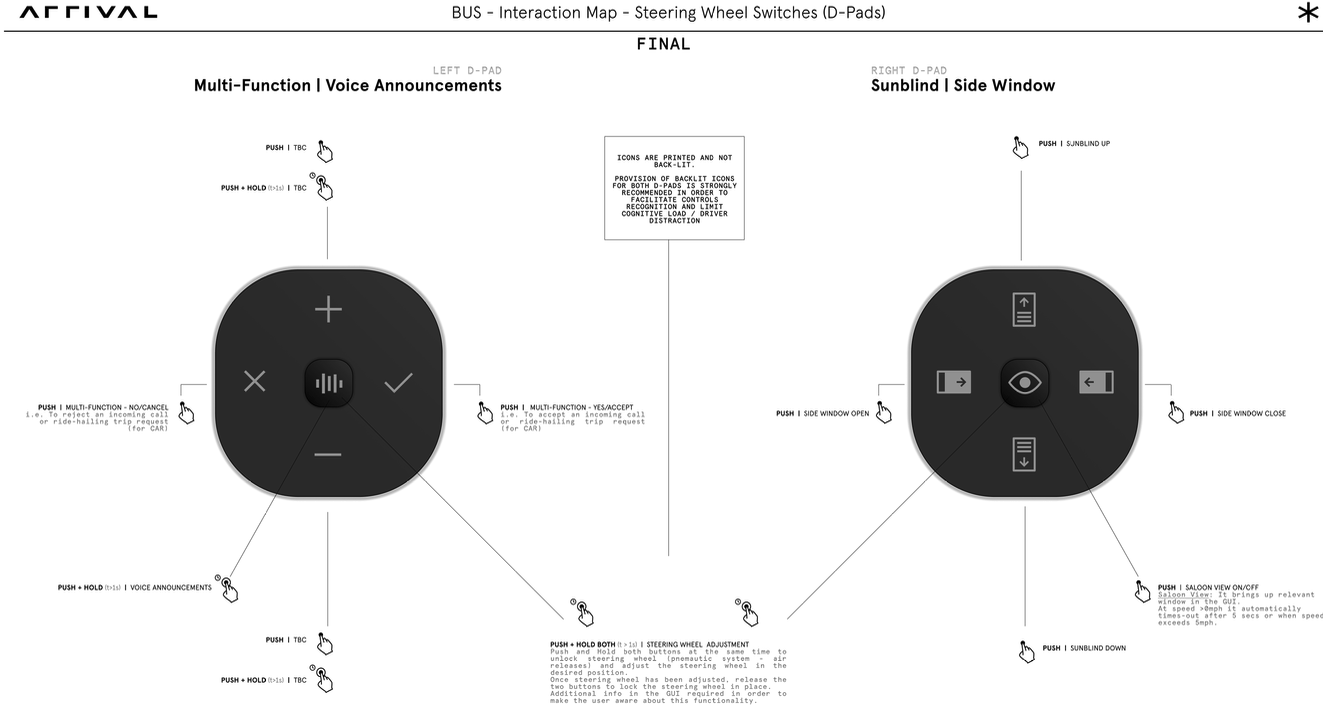
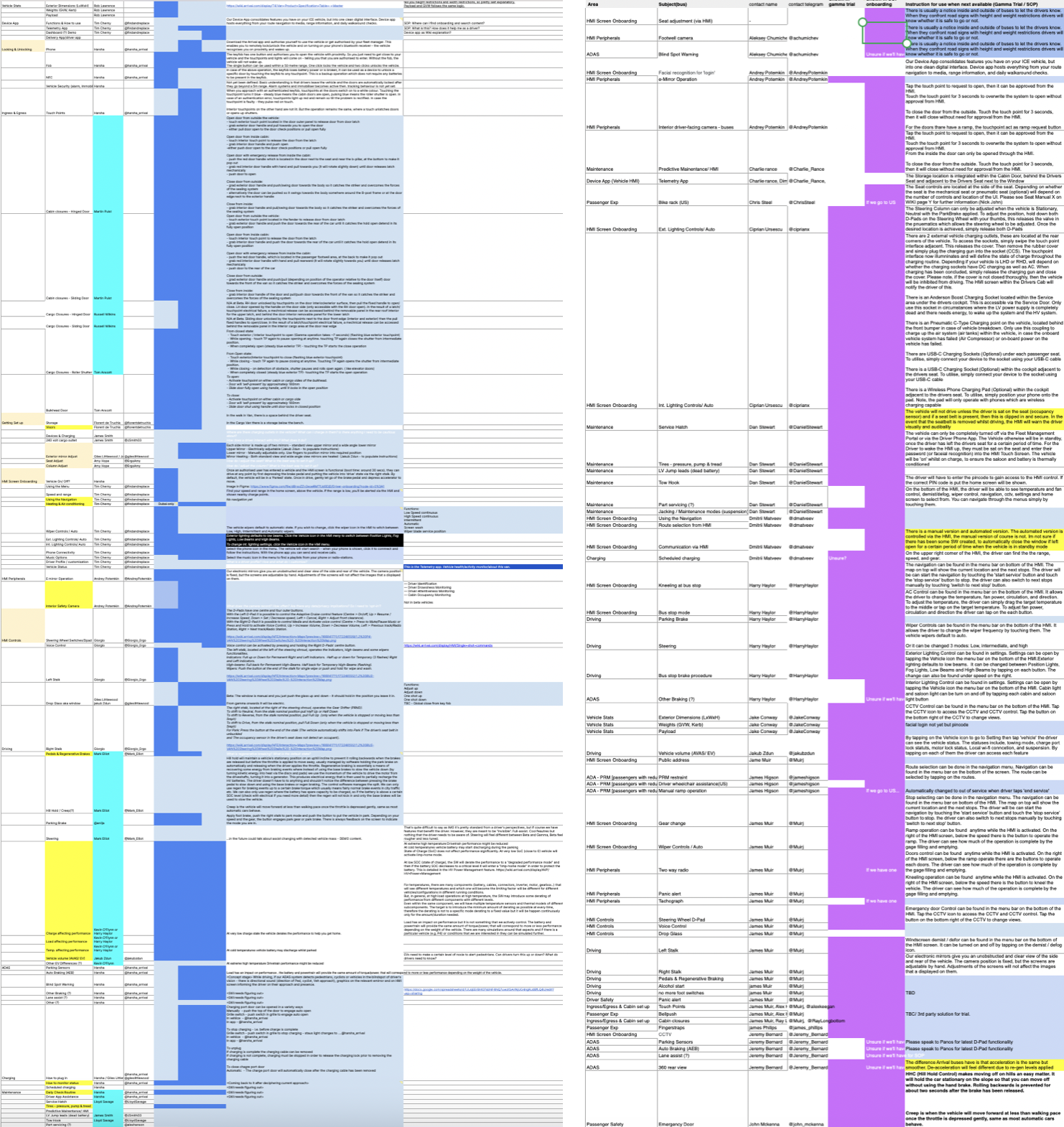
Arrival’s first user-facing record of how its vehicles worked: 184 interactions, catalogued with engineering
For launch and beyond
A digital roadmap for launch
A blueprint for onboarding fleet customers
A software-agnostic process for keeping content current
Legal and liability recommendations, signed off with Brand and Legal before handover to Sales
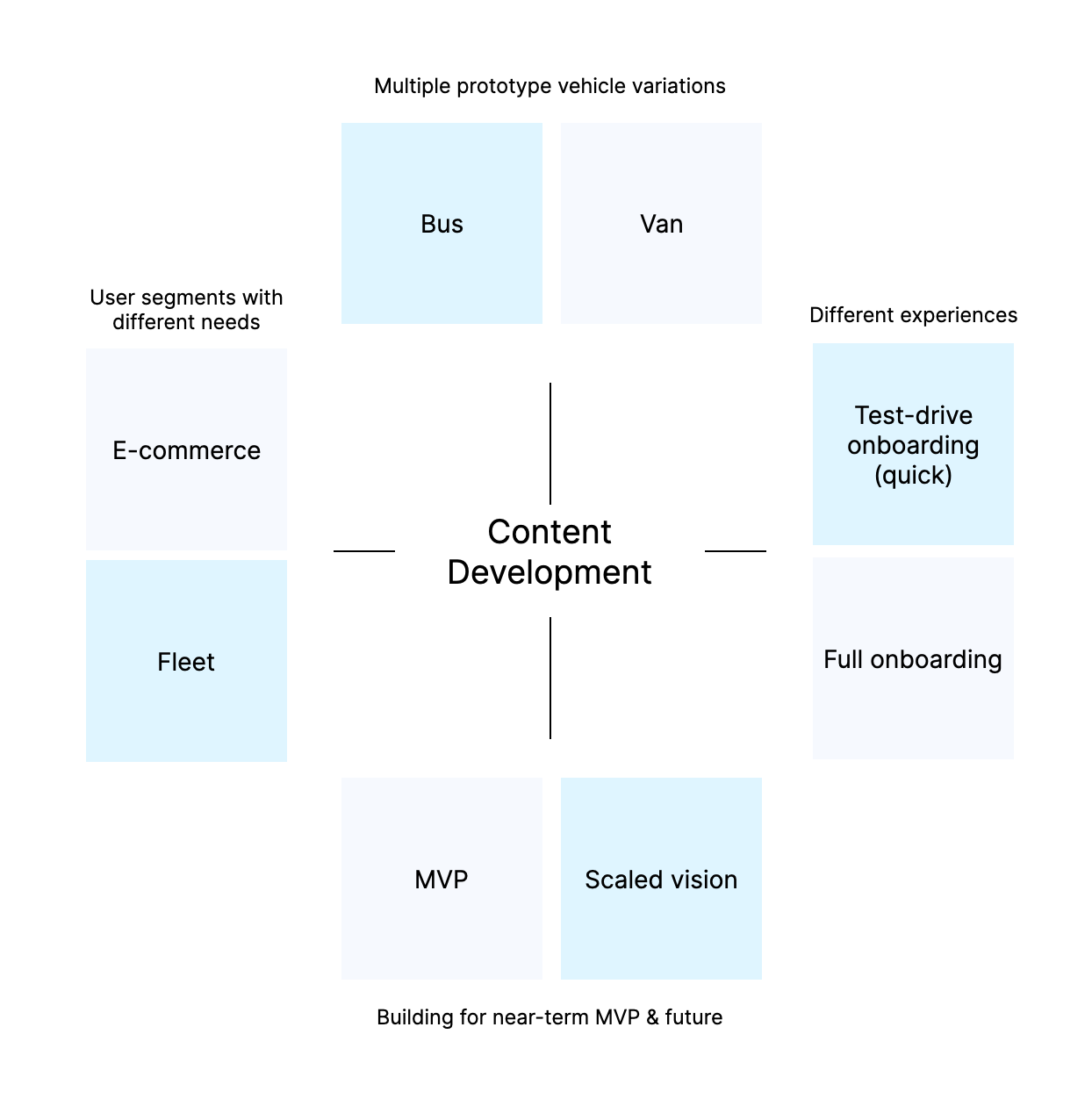
TensionI had to design for vehicles that were still changing, and for a scaled future, at the same time:
Several prototype vehicles, each with different functionality, some of it still undecided
Different users with different needs: fleet drivers, small-business drivers, cleaners and shunters
Timelines that kept moving, with near-term trials that couldn't slip
No written record anywhere of how the vehicles were supposed to work
Key Decisions-
The problem: drivers were about to meet radically different vehicles, and nobody was preparing them.
The call: I set out a training vision for the whole company: three kinds of training, ten user groups and one learning platform, fully digital by launch. Then the research and the first trials changed the picture. Clients trained in person, drivers relied on their trainer, and the vehicles kept changing. So I built in-person onboarding for the trials first, designed to move into the digital system later.
Instead of: launching fully digital or building the platform first. Both would have left the first trials with nothing usable.
Result: five short modules, tested over five rounds of research with UX Research and signed off for the First Bus trial.
-
The problem: nobody had written down how Arrival's vehicles were meant to work.
The call: I set the criteria (safety critical, unique to EVs, unique to Arrival) and worked with engineers to catalogue 184 vehicle interactions across bus and van. Then I rewrote engineering language into plain words drivers could act on.
Why: research showed information degraded at every hand-off, from manufacturer to trainer to driver. Without one shared source, every piece of content would contradict the next as the vehicles changed.
Instead of: collecting content feature by feature from each team's specs.
Result: Arrival's first record of how its vehicles worked. Product owners signed off 128 instructions, and four product gaps went to engineering.
-
The problem: the experience kept breaking between teams, and nobody owned onboarding long term.
The call: I first handed over the full end-to-end blueprint. Stakeholders lost interest, so I switched to journeys cut for each team and took the critical gaps straight to the Chief Design Officer. Where a gap was really a missing owner, I designed the role. For onboarding, I built the content process it would need once I left.
Why: in a fast-growing company with siloed teams, a blueprint changed nothing unless a named person or team owned the fix.
Instead of: one big blueprint for everyone, which nobody acted on.
Result: two client-facing roles hired using my deliverables, and onboarding formally handed to Sales, signed off by both VPs in April 2022.
ImpactOnboarding was signed off and ready to run. Arrival folded before vehicles reached clients, so the trials never happened. The work still changed how Arrival operated: it fixed gaps that would have hit every customer on day one, and gave the company a shared picture of how selling a vehicle actually worked.
-
Writing instructions for 184 interactions made product teams settle how features actually worked. With the research, it exposed gaps I took to engineering: doors that could open while the wheels weren't straight, speed and warnings too small on the in-cab screen, a panic button that was easy to bump, and no clear answer for a power failure (emergency lighting, doors, the wheelchair ramp, and where emergency equipment was stored).
-
Without onboarding, drivers would have taken a radically different vehicle on the road untrained, and Arrival would have carried the safety and liability risk. I built the programme and left it owned: a formal handover to Sales, signed off by the Sales and Commercialisation VPs in April 2022.
-
Mapping the van journey end to end showed nobody owned the client relationship after the sale, so clients would have been chased by several teams with duplicate requests. I defined two client-facing roles. Both were hired and onboarded using my deliverables.
-
The blueprint showed where handoffs between teams broke and where teams were duplicating each other's work. It became the reference Arrival used to understand how commercialisation ran, and I took the critical gaps to the Chief Design Officer.
-
“This work helped us in some cases to redesign the way we provide our features to the customer, by helping us to see our product through ‘unexperienced user’ glasses.”
Bus Engineer
-
"There were so many cases where we were blocked... you always found a way to make things work, whether the solution was through working around limitations or re-prioritising."
Service Designer
-
“Through her initial work, she helped senior leadership recognize the gap of broader onboarding design across bus / van, and the value of getting this right for customers. She was trusted and empowered to organize a more comprehensive work stream to define and design onboarding across a variety of products, channels and timelines.”
Design Lead